
£3.06
On Hold
Angelica seeds, organic - pkg of 5 seeds
More than 10 available
Details
Shipping: United Kingdom: £3.00 (more destinations)
Sales Tax: check
Condition: Brand new
*The store has not been updated recently. You may want to contact the merchant to confirm the availability of the product.
Angelica archangelica, commonly known as Garden Angelica, Holy Ghost, Wild Celery, and Norwegian angelica, is a biennial plant which is cultivated for its sweetly scented edible stems and roots.
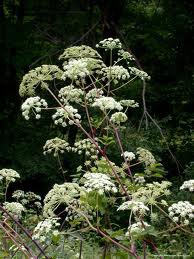
During its first year it only grows leaves, but during its second year its fluted stem can reach a height of two meters (or six feet). Its leaves are composed of numerous small leaflets, divided into three principal groups, each of which is again subdivided into three lesser groups. The edges of the leaflets are finely toothed or serrated. The flowers, which blossom in July, are small and numerous, yellowish or greenish in colour, and are grouped into large, globular umbels, which bear pale yellow, oblong fruits. Angelica only grows in damp soil.
From the 10th century on, angelica was cultivated as a vegetable and medicinal plant. A flute-like instrument with a clarinet-like sound can be made of its hollow stem. It is used to flavour liqueurs or aquavits (e.g. Chartreuse, Bénédictine, Vermouth and Dubonnet), omelettes and trout, and as jam. The long bright green stems are also candied and used as decoration. The fruits are tiny mericarps and are used in the production of absinthe and other alcoholic drinks.
Perennial to Zone 4.
Each package of seeds comes with growing instructions.
During its first year it only grows leaves, but during its second year its fluted stem can reach a height of two meters (or six feet). Its leaves are composed of numerous small leaflets, divided into three principal groups, each of which is again subdivided into three lesser groups. The edges of the leaflets are finely toothed or serrated. The flowers, which blossom in July, are small and numerous, yellowish or greenish in colour, and are grouped into large, globular umbels, which bear pale yellow, oblong fruits. Angelica only grows in damp soil.
From the 10th century on, angelica was cultivated as a vegetable and medicinal plant. A flute-like instrument with a clarinet-like sound can be made of its hollow stem. It is used to flavour liqueurs or aquavits (e.g. Chartreuse, Bénédictine, Vermouth and Dubonnet), omelettes and trout, and as jam. The long bright green stems are also candied and used as decoration. The fruits are tiny mericarps and are used in the production of absinthe and other alcoholic drinks.
Perennial to Zone 4.
Each package of seeds comes with growing instructions.


