
£16.13
Add to Cart
Model Railroad optical train detector module for O, HO, N gauge
10 available
Details
Shipping: United Kingdom: free (more destinations)
Condition: Brand new
*The store has not been updated recently. You may want to contact the merchant to confirm the availability of the product.
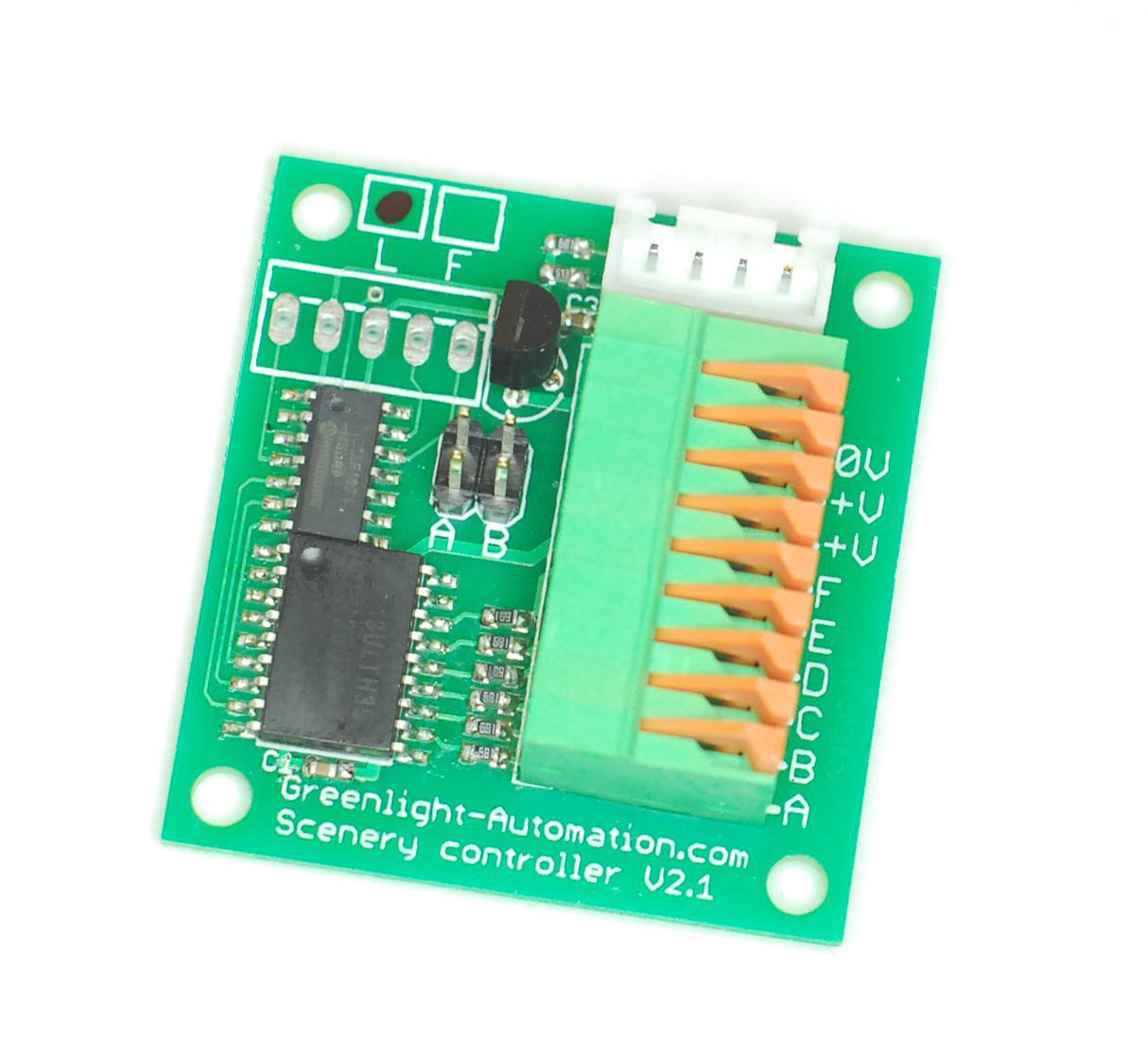
This is a compact PCB to detect a train or rolling stock in any railway model. An optical sensor is supplied, pre-wired and ready to fit within the tracks or adjacent to the rails. The board has two LED outputs (one for train present and the other for NOT present) and two relay drivers (also one for train present and the other for train NOT present). As a train passes the sensor, the "train present" LED and relay output will turn on and remain on until the rolling stock is clear of the detector. When the train has passed, the "train present" LED and relay output will turn off and the "train NOT present" LED and relay outputs will turn on. Finally, a "stretch" output is provided for an LED and another for relays. The stretch output will turn on as soon as the train is detected and will remain on for 1 second, 2 seconds, 5 seconds or 10 seconds after the train has passed. This has current limiting built in for LED outputs. If filament lamps such as grain of wheat bulbs are used, the relay outputs may be used which do not have current limiting resistors. The PCB is just 38mm x 40mm with four fixing holes for convenient mounting. The size of the PCB allows it to be mounted under the layout or inside many lineside buildings including many N gauge buildings. The sensor, fitted with 200mm of wire is just 4mm x 12mm and 7mm high. The wires at the bottom of the sensor can be routed down or to the side as needed. The optical components of the sensor are compact enough to sit between the sleepers of O, HO and OO gauge track for a near invisible installation. N gauge track may need one sleeper removed for best sensor operation. All power and signal connections use spring terminals for a reliable connection without the need for tools. The circuit requires a supply voltage of 8V to 16V to drive the LEDs. If filament lamps or relays are used, the supply voltage should be chosen to suit the lamps or relays. Full installation and configuration instructions are supplied and we offer email support for technical queries. This circuit uses commercial grade micro-controllers for reliable operation and stable timings, regardless of supply voltage or temperature.


 GB, Berkshire
