
£7.33
Add to Cart
15 Guava tree bio seeds. Exotic plant, with delicious fruits! Free shipping


More than 10 available, 6 sold
Details
Shipping: United Kingdom: free (more destinations)
Condition: Brand new
Enjoy a beautiful tree in your garden, with a juicy and tasty fruit. This product is for 15 Guava tree seeds.
Bio Seeds - These don't have any quimical product or process added
IF YOU BUY:2 - 10% DISCOUNT ON FINAL VALUE 3 - 15% DISCOUNT ON FINAL VALUE 4 OR MORE - 20% DISCOUNT ON FINAL VALUE
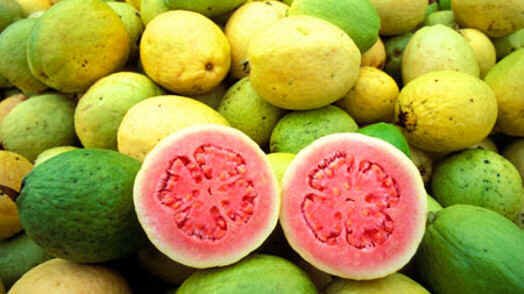
Guava(from Wikipedia): Guavas are plants in the Myrtle family genus Psidium, which contains about 100 species of tropical shrubs and small trees. They are native to Mexico, Central America, and northern South America. Guavas are now cultivated and naturalized throughout the tropics and subtropics in Africa, South Asia, Southeast Asia, the Caribbean, subtropical regions of North America, Hawaii, New Zealand, Australia and Spain. Types The most frequently eaten species, and the one often simply referred to as "the guava", is the Apple Guava (Psidium guajava). Guavas are typical Myrtoideae, with tough dark leaves that are opposite, simple, elliptic to ovate and 5–15 centimetres (2.0–5.9 in) long. The flowers are white, with five petals and numerous stamens. The genera Accara and Feijoa (= Acca, Pineapple Guava) were formerly included inPsidium. Common names The term "guava" appears to derive from Arawak guayabo "guava tree", via the Spanish guayaba. It has been adapted in many European and Asian languages, having a similar form. Another term for guavas is pera, derived from pear. It is common around the western Indian Ocean and probably derives from Spanish or Portuguese. In some Middle-Easternregions including Pakistan and North India, guava is also called amrood, possibly a variant of armoot meaning "pear" in Arabic and Turkish languages. Ecology Psidium species are used as food plants by the caterpillars of some Lepidoptera, mainly moths like the Ello Sphinx (Erinnyis ello), Eupseudosoma aberrans, E. involutum, andHypercompe icasia. Mites like Pronematus pruni and Tydeus munsteri are known to parasitize the Apple Guava (P. guajava) and perhaps other species. The bacterium Erwinia psidii causes rot diseases of the Apple Guava. The fruit is not only relished by humans, but by many mammals and birds as well. The spread of introduced guavas owes much to this fact, since animals eat the fruit and disperse the seeds in their droppings. In several tropical regions, including Hawaii, some species (namely Strawberry Guava, P. littorale, and to a lesser extent Apple Guava) have become invasive species. On the other hand, several species have become very rare due to habitat destruction and at least one (Jamaican Guava, P. dumetorum), is already extinct. Guava wood is used for meat smoking in Hawaii and is used at barbecue competitions across the United States. In Cuba and Mexico the leaves are used in barbecues. Fruit Guava fruit, usually 4 to 12 centimetres (1.6 to 4.7 in) long, are round or oval depending on the species. The outer skin may be rough, often with a bitter taste, or soft and sweet. Varying between species, the skin can be any thickness, is usually green before maturity, but becomes yellow, maroon, or green when ripe. Guava fruit generally have a pronounced and typical fragrance, similar to lemon rind but less sharp. Guava pulp may be sweet or sour, tasting something between pear and strawberry, off-white ("white" guavas) to deep pink ("red" guavas), with the seeds in the central pulp of variable number and hardness, depending on species. Range Guavas are cultivated in many tropical and subtropical countries. Several species are grown commercially; apple guava and its cultivars are those most commonly traded internationally. Mature trees of most species are fairly cold-hardy and can survive temperatures slightly colder than 25 °F (−4 °C) for short periods of time, but younger plants will likely freeze to the ground.[3] Guavas are also of interest to home growers in temperate areas. They are one of the few tropical fruits that can grow to fruiting size in pots indoors. When grown from seed, guavas can bear fruit as soon as two years, or as long as eight years. Culinary uses In Mexico, the guava agua fresca beverage is popular. The entire fruit is a key ingredient in punch, and the juice is often used in culinary sauces (hot or cold), as well as artisan candies, dried snacks, fruit bars, desserts, or dipped in Chamoy. Pulque de Guava is a popular blend of the native alcoholic beverage. In many countries, guava is eaten raw, typically cut into quarters or eaten like an apple, or with a pinch of salt and pepper, cayenne powder or masala in some countries. It is known as the winter national fruit of Pakistan. In the Philippines, ripe guava is used in cooking sinigang. Guava is a popular snack in Taiwan, sold on many street corners and night markets during hot weather, accompanied by packets of dried plum powder mixed with sugar and salt for dipping. In east Asia, guava is commonly eaten with sweet and sour dried plum powder mixtures. Guava juice is popular in many countries. The fruit is also often prepared in fruit salads. Because of its high level of pectin, guavas are extensively used to make candies, preserves, jellies, jams, and marmalades (such as Brazilian goiabada and Colombian and Venezuelan bocadillo), and also for juices and aguas frescas or may be used in a marmalade jam on toast. Red guavas can be used as the base of salted products such as sauces, substituting for tomatoes, especially to minimize acidity. A drink may be made from an infusion of guava fruits and leaves which in Brazil is called chá-de-goiabeira, i.e. "tea" of guava tree leaves, considered medicinal. Nutritional value Guavas are rich in dietary fiber, vitamins A and C, folic acid, and the dietary minerals, potassium, copper and manganese. Having a generally broad, low-calorie profile of essential nutrients, a single common guava (P. guajava) fruit contains about four times the amount of vitamin C as an orange. However, nutrient content varies across guava cultivars. Although the strawberry guava (P. littorale var. cattleianum) has about 25% of the amount found in more common varieties, its total vitamin C content in one serving (90 mg) still provides 100% of the Dietary Reference Intake for adult males. Guavas contain both carotenoids and polyphenols like (gallocatechin, guaijaverin, leucocyanidin and amritoside[7]–the major classes of antioxidant pigments – giving them relatively high potential antioxidant value among plant foods. As these pigments produce the fruit skin and flesh color, guavas that are red-orange have more pigment content as polyphenol, carotenoid and pro-vitamin A, retinoid sources than yellow-green ones.
Bio Seeds - These don't have any quimical product or process added
IF YOU BUY:2 - 10% DISCOUNT ON FINAL VALUE 3 - 15% DISCOUNT ON FINAL VALUE 4 OR MORE - 20% DISCOUNT ON FINAL VALUE
Guava(from Wikipedia): Guavas are plants in the Myrtle family genus Psidium, which contains about 100 species of tropical shrubs and small trees. They are native to Mexico, Central America, and northern South America. Guavas are now cultivated and naturalized throughout the tropics and subtropics in Africa, South Asia, Southeast Asia, the Caribbean, subtropical regions of North America, Hawaii, New Zealand, Australia and Spain. Types The most frequently eaten species, and the one often simply referred to as "the guava", is the Apple Guava (Psidium guajava). Guavas are typical Myrtoideae, with tough dark leaves that are opposite, simple, elliptic to ovate and 5–15 centimetres (2.0–5.9 in) long. The flowers are white, with five petals and numerous stamens. The genera Accara and Feijoa (= Acca, Pineapple Guava) were formerly included inPsidium. Common names The term "guava" appears to derive from Arawak guayabo "guava tree", via the Spanish guayaba. It has been adapted in many European and Asian languages, having a similar form. Another term for guavas is pera, derived from pear. It is common around the western Indian Ocean and probably derives from Spanish or Portuguese. In some Middle-Easternregions including Pakistan and North India, guava is also called amrood, possibly a variant of armoot meaning "pear" in Arabic and Turkish languages. Ecology Psidium species are used as food plants by the caterpillars of some Lepidoptera, mainly moths like the Ello Sphinx (Erinnyis ello), Eupseudosoma aberrans, E. involutum, andHypercompe icasia. Mites like Pronematus pruni and Tydeus munsteri are known to parasitize the Apple Guava (P. guajava) and perhaps other species. The bacterium Erwinia psidii causes rot diseases of the Apple Guava. The fruit is not only relished by humans, but by many mammals and birds as well. The spread of introduced guavas owes much to this fact, since animals eat the fruit and disperse the seeds in their droppings. In several tropical regions, including Hawaii, some species (namely Strawberry Guava, P. littorale, and to a lesser extent Apple Guava) have become invasive species. On the other hand, several species have become very rare due to habitat destruction and at least one (Jamaican Guava, P. dumetorum), is already extinct. Guava wood is used for meat smoking in Hawaii and is used at barbecue competitions across the United States. In Cuba and Mexico the leaves are used in barbecues. Fruit Guava fruit, usually 4 to 12 centimetres (1.6 to 4.7 in) long, are round or oval depending on the species. The outer skin may be rough, often with a bitter taste, or soft and sweet. Varying between species, the skin can be any thickness, is usually green before maturity, but becomes yellow, maroon, or green when ripe. Guava fruit generally have a pronounced and typical fragrance, similar to lemon rind but less sharp. Guava pulp may be sweet or sour, tasting something between pear and strawberry, off-white ("white" guavas) to deep pink ("red" guavas), with the seeds in the central pulp of variable number and hardness, depending on species. Range Guavas are cultivated in many tropical and subtropical countries. Several species are grown commercially; apple guava and its cultivars are those most commonly traded internationally. Mature trees of most species are fairly cold-hardy and can survive temperatures slightly colder than 25 °F (−4 °C) for short periods of time, but younger plants will likely freeze to the ground.[3] Guavas are also of interest to home growers in temperate areas. They are one of the few tropical fruits that can grow to fruiting size in pots indoors. When grown from seed, guavas can bear fruit as soon as two years, or as long as eight years. Culinary uses In Mexico, the guava agua fresca beverage is popular. The entire fruit is a key ingredient in punch, and the juice is often used in culinary sauces (hot or cold), as well as artisan candies, dried snacks, fruit bars, desserts, or dipped in Chamoy. Pulque de Guava is a popular blend of the native alcoholic beverage. In many countries, guava is eaten raw, typically cut into quarters or eaten like an apple, or with a pinch of salt and pepper, cayenne powder or masala in some countries. It is known as the winter national fruit of Pakistan. In the Philippines, ripe guava is used in cooking sinigang. Guava is a popular snack in Taiwan, sold on many street corners and night markets during hot weather, accompanied by packets of dried plum powder mixed with sugar and salt for dipping. In east Asia, guava is commonly eaten with sweet and sour dried plum powder mixtures. Guava juice is popular in many countries. The fruit is also often prepared in fruit salads. Because of its high level of pectin, guavas are extensively used to make candies, preserves, jellies, jams, and marmalades (such as Brazilian goiabada and Colombian and Venezuelan bocadillo), and also for juices and aguas frescas or may be used in a marmalade jam on toast. Red guavas can be used as the base of salted products such as sauces, substituting for tomatoes, especially to minimize acidity. A drink may be made from an infusion of guava fruits and leaves which in Brazil is called chá-de-goiabeira, i.e. "tea" of guava tree leaves, considered medicinal. Nutritional value Guavas are rich in dietary fiber, vitamins A and C, folic acid, and the dietary minerals, potassium, copper and manganese. Having a generally broad, low-calorie profile of essential nutrients, a single common guava (P. guajava) fruit contains about four times the amount of vitamin C as an orange. However, nutrient content varies across guava cultivars. Although the strawberry guava (P. littorale var. cattleianum) has about 25% of the amount found in more common varieties, its total vitamin C content in one serving (90 mg) still provides 100% of the Dietary Reference Intake for adult males. Guavas contain both carotenoids and polyphenols like (gallocatechin, guaijaverin, leucocyanidin and amritoside[7]–the major classes of antioxidant pigments – giving them relatively high potential antioxidant value among plant foods. As these pigments produce the fruit skin and flesh color, guavas that are red-orange have more pigment content as polyphenol, carotenoid and pro-vitamin A, retinoid sources than yellow-green ones.


