£2.31
On Hold
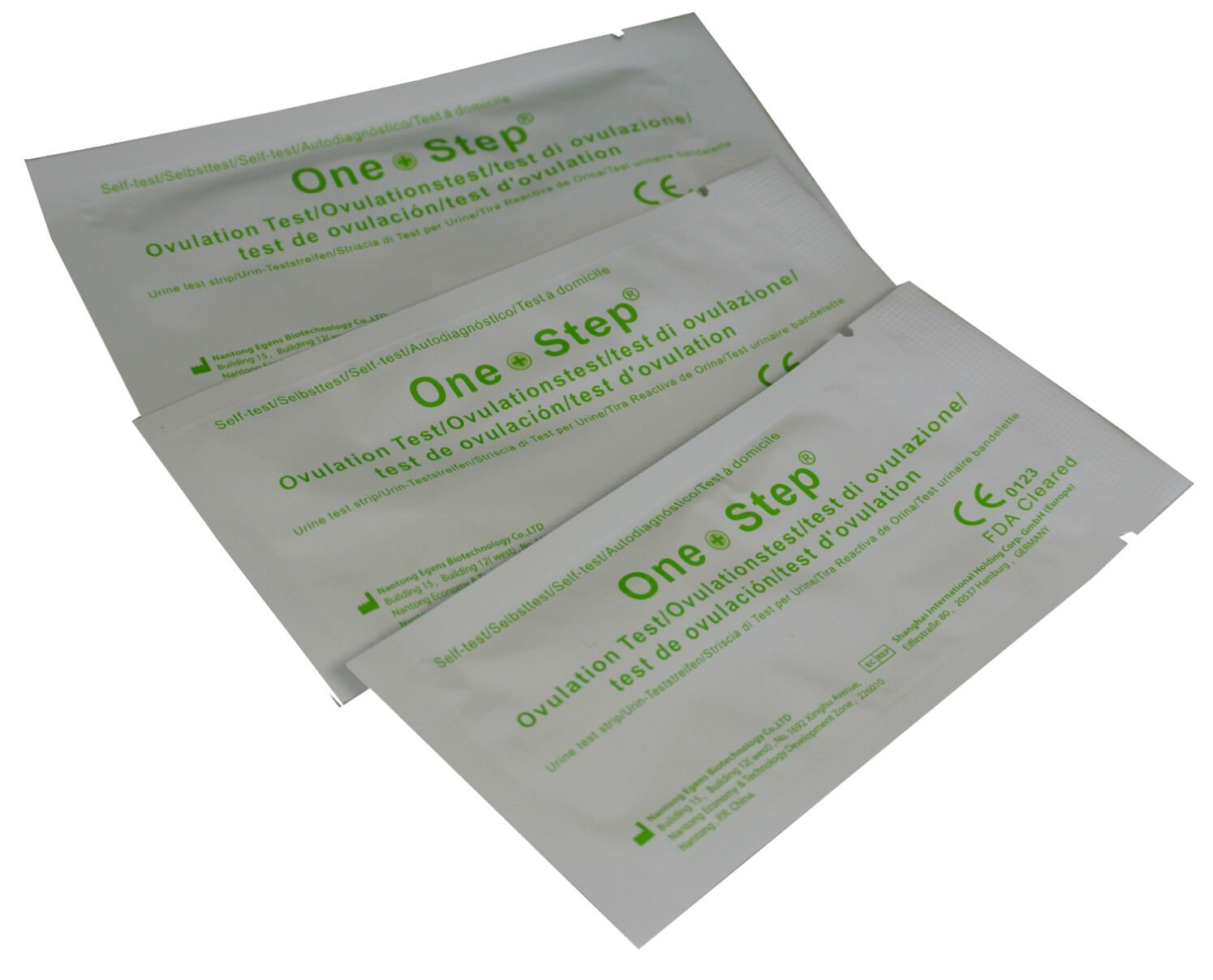
50 Ovulation Fertility Test Strips 20mIU Home Urine Kit One Step
More than 10 available
Details
Shipping: United Kingdom: £12.00 (more destinations)
Condition: Brand new
Returns: 30 days, buyer pays return shipping (more)
*The store has not been updated recently. You may want to contact the merchant to confirm the availability of the product.


Ovulation Tests
A pregnancy begins with conception. A child is conceived when the male sperm successfully fertilises the female egg. Successful fertilisation is most likely during a 24-hour period following the LH surge. Since this window is usually only open once a month and for a short period of time, being able to predict the LH surge is very helpful when trying to become pregnant. We have selected these ovulation tests for their price, accuracy and reliability. These tests look for the presence of LH in urine.
How does a home ovulation test work and what is the LH surge?
When a woman is about to ovulate, her body releases a large amount of a hormone called LH (Luteinising Hormone). LH is always present in your urine but the levels increase (surge) in the middle of your cycle, causing you to release an egg from the ovary. This process is called ovulation. If the LH surge is present, ovulation is likely to occur in the next 12 to 36 hours. Our ovulation tests detect the LH surge by measuring the level of LH in urine.
Once ovulation has taken place the level of Progesterone increases and this causes the basal body temperature to rise.
How exactly do you measure a menstrual cycle?
Very simply a menstrual cycle is defined as starting on the day of first bleed to the start of your next bleed. So Cycle Day 12 (CD12) would be 12 days after you first started your period.
How do I know what is best for me and what does this mIU stuff all mean anyway?
In its simplest terms the numbers (e.g. 25mIU) are just a standardised measurement system that detects the pregnancy or ovulation hormones present in your body. The lower the number the higher the sensitivity.
Our Ovulation Tests (3 sensitivities)
20mIU - High sensitivity
30mIU - Medium Sensitivity
40mIU - Low Sensitivity
As with pregnancy tests the higher the sensitivity the earlier you will detect if you are about to ovulate. If you have regular cycles and no known problems then the High 20mIU sensitivity are the ones you should have and the ones we recommend. We have given more detailed information further down the page about why you may need different sensitivity ovulation tests and how to discover if you do.
est sensitivity
Basically for the majority of women (around 90%) we recommend and supply, as standard, 20mIU High sensitivity ovulation tests and 10mIU High sensitivity pregnancy tests. This is what we will send you if you do not specify anything different.
When should I do the test?
To determine when to begin testing, you need to work out the length of your menstrual cycle. The length of your cycle is from the first day of your period to the last day before your next period starts (count the first day of bleeding as day 1). Calculate what the usual length of your menstrual cycle has been the last few months. Once you have worked out the average length of your cycle you can refer to the chart that is included with our tests which clearly shows on which day of your menstrual cycle you should begin testing.
Why should I avoid testing first thing in the morning?
You should avoid testing your urine first thing in the morning as LH is synthesized in your body early in the morning. It will not show up in your urine until later in the day.
Once I receive a positive result, when is the best time to have intercourse?
Ovulation usually follows the start of the LH surge within 24-36 hours. This is the time when you are at your most fertile, therefore you should have intercourse during this time.
How long will it take before I can read the result?
A positive result can often be read in under 40 seconds but to confirm a negative result (no test line or the test line is much fainter than the control line) you should wait the full 10 minutes.
What happens if after using the tests provided I have still not detected my LH surge?
Most women with regular cycles will detect their LH Surge in 5 days or under. However, if you have irregular cycles you may need to test for longer and may require additional ovulation tests to detect your LH Surge. Also see the section below regarding different sensitivities of our ovulation tests.
I have recently come off the contraceptive pill. Will this affect my result?
As the pill disrupts your natural hormone balance it may take a few months for your periods to return to normal. You may want to wait until you have had 2 normal periods before starting to use ovulation tests. Please be aware that pregnancy and breastfeeding can affect the results of any ovulation test.
Will alcohol or other common medications affect the results of this test?
No, but you should consult your doctor if you are taking any hormonal treatments.
Can I use the ovulation test for contraception?
No, the test is not designed to prevent conception. As sperm can survive for 72 hours you might still become pregnant if you had intercourse before you detected your LH Surge and also because some woman can and do ovulate more than once in the same cycle.
What about the sensitivity of ovulation tests and why might I need a different sensitivity?
Ok, we are going to dispel a few old wives' tales here and give you some facts:-
Firstly, virtually every woman in the world will ovulate almost exactly 14 days BEFORE she starts her period - not the other way round!! That's fine for women with regular cycles of 26-30 days between each period but the trouble is a lot of women have irregular periods or other conditions such as PCOS, a lazy ovary, previous miscarriages, endometriosis, currently breast feeding etc.
So what exactly happens is this:-
In any one cycle and on average, 80% of women will ovulate normally but around 11% of women will not ovulate at all and another 9% will ovulate twice or more. The latter explains a lot of those unwanted pregnancies by Roman Catholics trusting to the "rhythm method" to prevent conception!!
Now the "average" woman will have an LH (the hormone that triggers ovulation) level of between 5-20mIU in her system. When the surge occurs the basal level rises to approximately 50-200mIU and at this level ovulation occurs and the egg is released from the ovary. This means that for most women the 20mIU High ovulation sensitivity tests that we sell are perfect.
But how will you know if they are not right for you? I hate to say this but it is trial and error. Firstly, if there is a problem and you don't seem to be ovulating normally - DON'T WORRY - it is not unusual. The reason is usually simple and is down to the fact that each woman is individual and can have different results from ovulation tests - here is just 1 example.
We have a lady who is suffering from PCOS and this can sometimes (NOT always) cause the LH level to be consistently at a higher level than "normal". This woman will appear to get a positive result with our 20mIU tests over several days and she is therefore not certain when she is ovulating. In this case we would recommend she purchase the lower sensitivity (30 or even 40mIU) ovulation tests which will better pinpoint the LH surge.
A pregnancy begins with conception. A child is conceived when the male sperm successfully fertilises the female egg. Successful fertilisation is most likely during a 24-hour period following the LH surge. Since this window is usually only open once a month and for a short period of time, being able to predict the LH surge is very helpful when trying to become pregnant. We have selected these ovulation tests for their price, accuracy and reliability. These tests look for the presence of LH in urine.
How does a home ovulation test work and what is the LH surge?
When a woman is about to ovulate, her body releases a large amount of a hormone called LH (Luteinising Hormone). LH is always present in your urine but the levels increase (surge) in the middle of your cycle, causing you to release an egg from the ovary. This process is called ovulation. If the LH surge is present, ovulation is likely to occur in the next 12 to 36 hours. Our ovulation tests detect the LH surge by measuring the level of LH in urine.
Once ovulation has taken place the level of Progesterone increases and this causes the basal body temperature to rise.
How exactly do you measure a menstrual cycle?
Very simply a menstrual cycle is defined as starting on the day of first bleed to the start of your next bleed. So Cycle Day 12 (CD12) would be 12 days after you first started your period.
How do I know what is best for me and what does this mIU stuff all mean anyway?
In its simplest terms the numbers (e.g. 25mIU) are just a standardised measurement system that detects the pregnancy or ovulation hormones present in your body. The lower the number the higher the sensitivity.
Our Ovulation Tests (3 sensitivities)
20mIU - High sensitivity
30mIU - Medium Sensitivity
40mIU - Low Sensitivity
As with pregnancy tests the higher the sensitivity the earlier you will detect if you are about to ovulate. If you have regular cycles and no known problems then the High 20mIU sensitivity are the ones you should have and the ones we recommend. We have given more detailed information further down the page about why you may need different sensitivity ovulation tests and how to discover if you do.
est sensitivity
Basically for the majority of women (around 90%) we recommend and supply, as standard, 20mIU High sensitivity ovulation tests and 10mIU High sensitivity pregnancy tests. This is what we will send you if you do not specify anything different.
When should I do the test?
To determine when to begin testing, you need to work out the length of your menstrual cycle. The length of your cycle is from the first day of your period to the last day before your next period starts (count the first day of bleeding as day 1). Calculate what the usual length of your menstrual cycle has been the last few months. Once you have worked out the average length of your cycle you can refer to the chart that is included with our tests which clearly shows on which day of your menstrual cycle you should begin testing.
Why should I avoid testing first thing in the morning?
You should avoid testing your urine first thing in the morning as LH is synthesized in your body early in the morning. It will not show up in your urine until later in the day.
Once I receive a positive result, when is the best time to have intercourse?
Ovulation usually follows the start of the LH surge within 24-36 hours. This is the time when you are at your most fertile, therefore you should have intercourse during this time.
How long will it take before I can read the result?
A positive result can often be read in under 40 seconds but to confirm a negative result (no test line or the test line is much fainter than the control line) you should wait the full 10 minutes.
What happens if after using the tests provided I have still not detected my LH surge?
Most women with regular cycles will detect their LH Surge in 5 days or under. However, if you have irregular cycles you may need to test for longer and may require additional ovulation tests to detect your LH Surge. Also see the section below regarding different sensitivities of our ovulation tests.
I have recently come off the contraceptive pill. Will this affect my result?
As the pill disrupts your natural hormone balance it may take a few months for your periods to return to normal. You may want to wait until you have had 2 normal periods before starting to use ovulation tests. Please be aware that pregnancy and breastfeeding can affect the results of any ovulation test.
Will alcohol or other common medications affect the results of this test?
No, but you should consult your doctor if you are taking any hormonal treatments.
Can I use the ovulation test for contraception?
No, the test is not designed to prevent conception. As sperm can survive for 72 hours you might still become pregnant if you had intercourse before you detected your LH Surge and also because some woman can and do ovulate more than once in the same cycle.
What about the sensitivity of ovulation tests and why might I need a different sensitivity?
Ok, we are going to dispel a few old wives' tales here and give you some facts:-
Firstly, virtually every woman in the world will ovulate almost exactly 14 days BEFORE she starts her period - not the other way round!! That's fine for women with regular cycles of 26-30 days between each period but the trouble is a lot of women have irregular periods or other conditions such as PCOS, a lazy ovary, previous miscarriages, endometriosis, currently breast feeding etc.
So what exactly happens is this:-
In any one cycle and on average, 80% of women will ovulate normally but around 11% of women will not ovulate at all and another 9% will ovulate twice or more. The latter explains a lot of those unwanted pregnancies by Roman Catholics trusting to the "rhythm method" to prevent conception!!
Now the "average" woman will have an LH (the hormone that triggers ovulation) level of between 5-20mIU in her system. When the surge occurs the basal level rises to approximately 50-200mIU and at this level ovulation occurs and the egg is released from the ovary. This means that for most women the 20mIU High ovulation sensitivity tests that we sell are perfect.
But how will you know if they are not right for you? I hate to say this but it is trial and error. Firstly, if there is a problem and you don't seem to be ovulating normally - DON'T WORRY - it is not unusual. The reason is usually simple and is down to the fact that each woman is individual and can have different results from ovulation tests - here is just 1 example.
We have a lady who is suffering from PCOS and this can sometimes (NOT always) cause the LH level to be consistently at a higher level than "normal". This woman will appear to get a positive result with our 20mIU tests over several days and she is therefore not certain when she is ovulating. In this case we would recommend she purchase the lower sensitivity (30 or even 40mIU) ovulation tests which will better pinpoint the LH surge.
You may also be interested in:
-
£15.00
-
£37.53

-
£41.28

-
£18.77

-
£17.26
-
£26.27
-
£26.27

-
£18.01
-
£22.52

-
£23.27