£110.00
Add to Cart
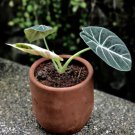
BORNEO KING~ TARO Alocasia macrorrhiza HUGE!! ELEPHANT EAR small potted Plant
More than 10 available
Details
Shipping: United Kingdom: free (more destinations)
Sales Tax: check
Condition: Brand new
This plant prefers warm temperatures, between 60 and 80 ºF is ideal. Alocasias will go dormant in temperatures below 60 ºF. As a tropical plant Alocasia 'Borneo Black' prefers high humidity but will tolerate lower levels. To improve humidity use humidifiers or group plants together to create a greenhouse effect.
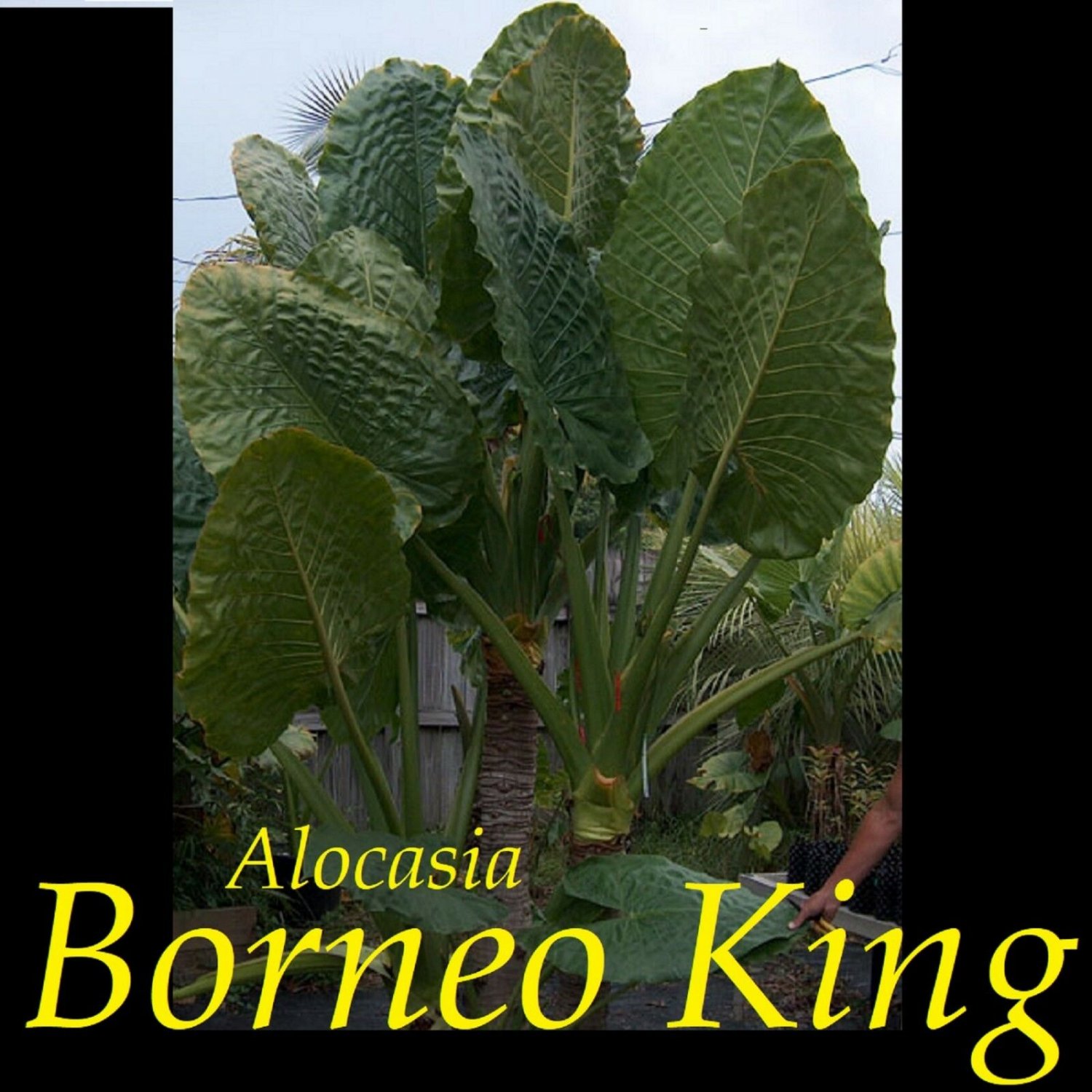
If grown in a pot, it will not reach its full potential, but still expect at least 1 to 1.5 metres (or more) if your pot is large enough. This is a very fast growing Alocasia. In good conditions, a baby (20cm high) will reach the size in the first 2 photos (1.5 metres plus) in less than a year.
The tubers of Colocasia are also known as “taro” that is usually used for food in Hawaii. On the other hand, Alocasia tubers are smaller, thin, longer and plain without the prominent stripes or eyes. Tubers of the both plants are grown into new plants and they may produce offsets that can be detached.
Elephant ears belong to two related groups of plants, Colocasia and Alocasia. Both types can be grown in the garden or as houseplants, though colocasias are more often planted outdoors (they're generally larger) and alocasias are a bit more common as houseplants.. . . . .364011234357!]0000000000000009783314145901!]
If grown in a pot, it will not reach its full potential, but still expect at least 1 to 1.5 metres (or more) if your pot is large enough. This is a very fast growing Alocasia. In good conditions, a baby (20cm high) will reach the size in the first 2 photos (1.5 metres plus) in less than a year.
The tubers of Colocasia are also known as “taro” that is usually used for food in Hawaii. On the other hand, Alocasia tubers are smaller, thin, longer and plain without the prominent stripes or eyes. Tubers of the both plants are grown into new plants and they may produce offsets that can be detached.
Elephant ears belong to two related groups of plants, Colocasia and Alocasia. Both types can be grown in the garden or as houseplants, though colocasias are more often planted outdoors (they're generally larger) and alocasias are a bit more common as houseplants.. . . . .364011234357!]0000000000000009783314145901!]
You may also be interested in:
-
£18.75

-
£28.86
-
£4.42
-
£4.12
-
£6.70

-
£6.23

-
£36.37

-
£7.48

-
£5.03

-
£4.66