
£42.63
Add to Cart
Wonderful Angel Wing Begonia Garden Plant
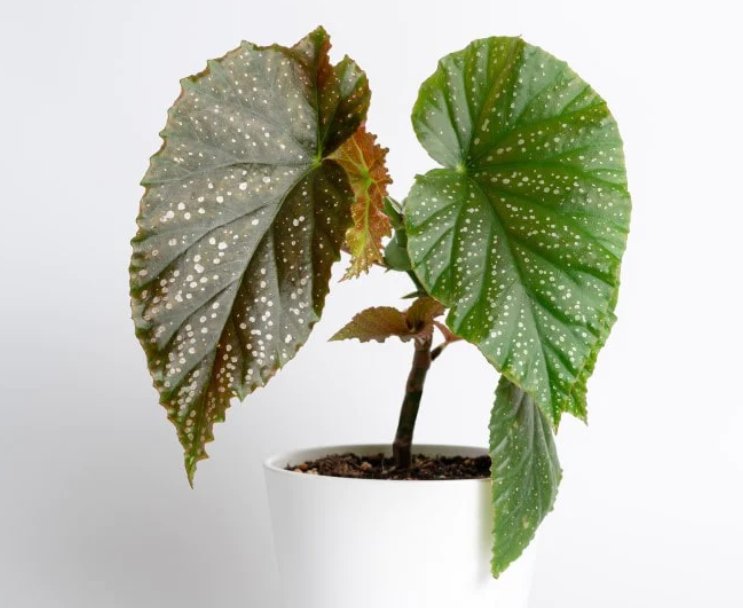


A General Description of Angel Wing Begonia
The Angel Wing Begonia is a type of perennial flowering shrub from the popular genus of plants known as Begonia. This type of cane begonia is known for its beauty and ease of care.
This fast growing begonia gets its name from and can be identified by its cane-like stems that produce angel wing shaped lush leaves which are uniquely dotted with spots. Given proper light and fertilization rich in phosphorus, these plants will produce flowers featuring magnificent pink, waxy blossoms that drape downward and have yellow eyes. Flowering usually occurs multiple times from early spring through late fall, and they have been known to bloom year round if given the proper environment.
Both the intensity and growth rates of the leaves and flowers are very dependent on temperatures and the amount and strength of light this plant receives. High light levels and warm temperatures promote blossoms, while low light levels will encourage leaf growth. If flowers are pale in color it’s a good indicator that the plant is not receiving enough sunlight as they will deepen with more light. The best lighting is provided by bright indirect light as direct light could fade the desirable silver leaf spots and cause leaf burn.
The History of Angel Wing Begonia
Begonias are native to Brazil and other tropical climates. They gained their worldwide fame and distribution after people such as the former governor of French Canada, Michael Begon (1638-1710), began to adore them for their ornamental value. This led to Begoniaceae, the family of large flowering plants of which Angel Wing Begonias belong, being named in his honor.
This particular type of Angel Wing Begonia known as Begonia x corallina is a hybrid type of begonia which was created in 1926 after the successful hybridization of the Begonia aconitifolia and the Begonia coccinea by the famous plant breeder, Eva Kenworthy Gray.
The Toxicity and Risks of Angel Wing Begonia
Begonia x corallina is known for its toxicity to both people and to pets.
Vomiting, diarrhea, excessive salivation, abdominal pain, kidney failure, and/or death can occur after the ingestion of this plant's sap—which contains needle-shaped crystals of calcium oxalate called raphides (known to cause kidney stones in humans).
Allergic dermatitis (skin inflammation) and swelling of the skin can occur after repeated skin exposure to this sap.
The tubers and canes of this plant contain the highest concentrations of toxic sap.
Ships to the continental United States only.
No shipping to PR.
PACKAGE
1 x Starter Plant
The Angel Wing Begonia is a type of perennial flowering shrub from the popular genus of plants known as Begonia. This type of cane begonia is known for its beauty and ease of care.
This fast growing begonia gets its name from and can be identified by its cane-like stems that produce angel wing shaped lush leaves which are uniquely dotted with spots. Given proper light and fertilization rich in phosphorus, these plants will produce flowers featuring magnificent pink, waxy blossoms that drape downward and have yellow eyes. Flowering usually occurs multiple times from early spring through late fall, and they have been known to bloom year round if given the proper environment.
Both the intensity and growth rates of the leaves and flowers are very dependent on temperatures and the amount and strength of light this plant receives. High light levels and warm temperatures promote blossoms, while low light levels will encourage leaf growth. If flowers are pale in color it’s a good indicator that the plant is not receiving enough sunlight as they will deepen with more light. The best lighting is provided by bright indirect light as direct light could fade the desirable silver leaf spots and cause leaf burn.
The History of Angel Wing Begonia
Begonias are native to Brazil and other tropical climates. They gained their worldwide fame and distribution after people such as the former governor of French Canada, Michael Begon (1638-1710), began to adore them for their ornamental value. This led to Begoniaceae, the family of large flowering plants of which Angel Wing Begonias belong, being named in his honor.
This particular type of Angel Wing Begonia known as Begonia x corallina is a hybrid type of begonia which was created in 1926 after the successful hybridization of the Begonia aconitifolia and the Begonia coccinea by the famous plant breeder, Eva Kenworthy Gray.
The Toxicity and Risks of Angel Wing Begonia
Begonia x corallina is known for its toxicity to both people and to pets.
Vomiting, diarrhea, excessive salivation, abdominal pain, kidney failure, and/or death can occur after the ingestion of this plant's sap—which contains needle-shaped crystals of calcium oxalate called raphides (known to cause kidney stones in humans).
Allergic dermatitis (skin inflammation) and swelling of the skin can occur after repeated skin exposure to this sap.
The tubers and canes of this plant contain the highest concentrations of toxic sap.
Ships to the continental United States only.
No shipping to PR.
PACKAGE
1 x Starter Plant
You may also be interested in:
-
£9.10
-
£11.63
-
£11.63
-
£123.10

-
£8.26
-
£10.51

-
£9.76
-
£22.89
-
£9.84
-
£8.26


 ID, Maluku
