
£19.69
On Hold
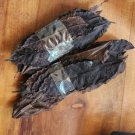
GREEN TEA LEAVES - CAMELLIA SINENSIS - DRY LEAVES

8 available
Details
Shipping: United Kingdom: free (more destinations)
Condition: Brand new
Returns: 7 days, buyer pays return shipping (more)


DESCRIPTIONWhat is Green tea: It’s not surprising that many people are surprised by tea. It’s surprising how much we can learn about something we drink every day. And it’s especially surprising when you learn that green tea and black tea are not only from the same plant species—they’re also made from the same leaves! They just go through different processes to get them to their final color. Green tea is made with Camellia sinensis, a small-leafed variety native to China that is typically used to make green and white teas. It evolved as a shrub growing in sunny regions with drier, cooler climates. It has a high tolerance for cold and thrives in mountainous regions. While all green tea originates from the same plant species, there are different types of green tea grown and produced all over the world today, including China, Japan, India, Sri Lanka, Taiwan, Bangladesh, New Zealand, Hawaii and even South Carolina. Green tea comes from China originally—in fact, it was said that even today the word “tea” in China refers only to green Types: There are two main types of green tea processing: Chinese and Japanese. Chinese green teas are fired in a pan, while Japanese green teas are steamed. Chinese Green Teas—Pan FiredThe Chinese style of green tea is characterized by pan firing, where tea leaves are heated in a basket, pan or mechanized rotating drum to halt the oxidation process.Chinese green teas may be fired more than once during processing, depending on the style of tea being produced. These firings may take place in wicker baskets, steel wok-like pans, metal drums or other containers over charcoal, gas flame, electric heat or hot air, depending on the final flavor outcome desired. Japanese Green Teas—SteamedThe Japanese style of green tea is characterized by steaming, where tea leaves are treated briefly with steam heat within hours of plucking to both halt the oxidation process and bring out the rich green color of both the tea leaves and the final brewed tea. The steaming process creates a unique flavor profile that can be described as sweet, vegetal or seaweed-like. Some Japanese green How to use: Here's how to make the perfect cup of green tea:Use fresh, pure, cold filtered water. Spring water is the best.Typically, green teas are brewed in short infusions at around 160 to 180 degrees.Don't scorch your tea! If the water is too hot, especially for green tea, your tea will release more bitterness and astringency more quickly.If you don't have an electric kettle with temperature control, simply allow your boiling water to rest before pouring it over your green tea leaves.It depends on the tea, but using about 2 grams of loose leaf tea per 8 oz. cup of water is a safe bet. If your tea package has specific recommendations for steeping, use those.Cover your steeping tea to keep all the heat in the steeping vessel.Green tea should steep from 30 to 60 seconds for early harvest, more delicate teas to 2 to 3 minutes for regular harvest, more robust teas.Most high-quality loose leaf teas can be steeped multiple times. SHIPPINGInternational orders will be shipped by India Post International order will take 11-25 business days to deliver goods worldwideFor express shipping please write to us.If your product is undelivered with in specific time period, we would like to request you please write us once before opening, item not received case. So we can update you about the delivery. RETURN POLICYReturn will be accepted within 15 Days from the Date of Delivery to Buyer. Please write to us before opening any return case. So we can mutually resolve the case.If Any Tax Is Applicable At Buyers Country, Buyer Has To Pay All Such Taxes As Per Law. PAYMENT We Accept Payment Through eCRATER payments Methods. FEEDBACK Please spare a few minutes to submit your valuable feedback. Thanks
You may also be interested in:
-
£28.52

-
£23.94
-
£17.86

-
£15.37

-
£25.90

-
£15.00

-
£11.25

-
£18.76
-
£16.70

-
£18.01


 IN, IN
