
£51.33
Add to Cart
venus flytrap Carnivorous Flower Houseplant Plant Rare - Home Garden Plant EBER
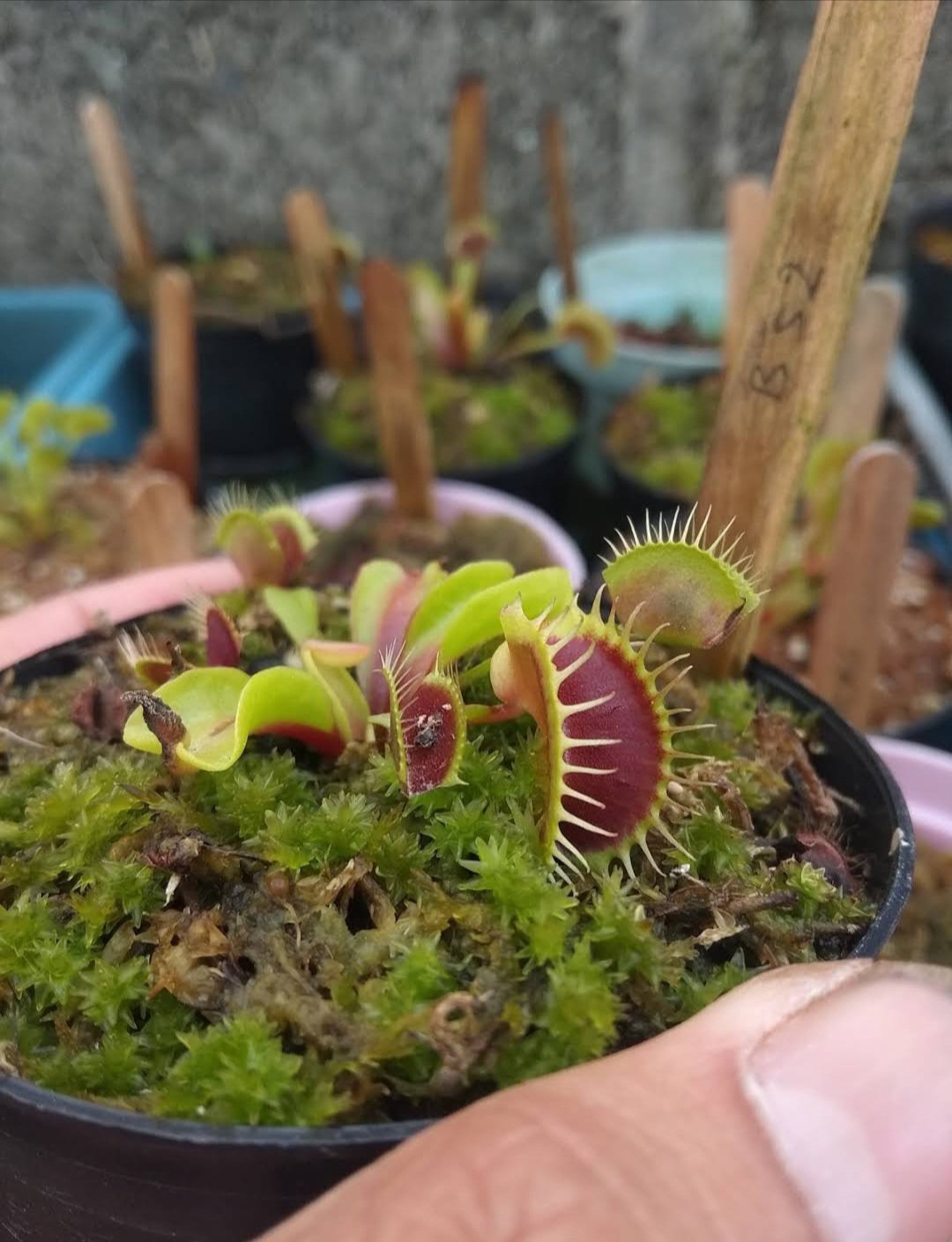


venus flytrap Carnivorous Flower Houseplant Plant Rare - Home Garden Plant EBER
Caring for a Venus flytrap (Dionaea muscipula) requires attention to specific environmental conditions and feeding habits, as it is a carnivorous plant that relies on insects for nutrients. Here are the essential care tips for a Venus flytrap:
1. **Light**: Venus flytraps require lots of bright, indirect sunlight. Place them in a south-facing window where they can receive at least 4-6 hours of direct sunlight per day. Avoid exposing them to intense, direct sunlight for prolonged periods, especially during the hottest part of the day.
2. **Water**: Use distilled water, rainwater, or water that is low in minerals (such as reverse osmosis water). Keep the soil consistently moist, but not waterlogged. Never use tap water or water that contains minerals, as they can harm the plant.
3. **Humidity**: Venus flytraps prefer high humidity levels. You can increase humidity by placing the pot on a humidity tray filled with water and pebbles, or by using a room humidifier. However, they can also tolerate average indoor humidity levels.
4. **Soil**: Plant Venus flytraps in a mix that is acidic and low in nutrients. A mix of sphagnum moss and perlite or silica sand works well. Avoid using potting soil or fertilizers, as they can harm the plant.
5. **Feeding**: Venus flytraps obtain nutrients from insects they capture. While they can survive without feeding, you can supplement their diet by placing small live insects (like flies, ants, or crickets) on their traps occasionally. Avoid feeding them with your fingers, as this can trigger them to close unnecessarily and waste energy.
6. **Dormancy**: Venus flytraps require a period of dormancy each year to thrive. During the winter months, reduce watering to keep the soil just moist (not wet) and place the plant in a cooler location where temperatures range between 5-15°C (40-60°F). This mimics their natural winter conditions.
7. **Potting**: Use a shallow pot with drainage holes to plant your Venus flytrap. They have shallow roots and prefer wider pots rather than deep ones. Repotting is typically done every 1-2 years, using the same acidic, nutrient-poor soil mix.
8. **Pruning**: Remove any dead or blackened traps using sterilized scissors or pruning shears. This helps keep the plant healthy and prevents potential rot or fungal issues.
9. **Pests**: While Venus flytraps are carnivorous and can catch small insects, they can still be susceptible to pests like aphids or spider mites. Check the plant regularly for signs of pests and treat with insecticidal soap or neem oil if necessary.
By following these care tips, you can ensure your Venus flytrap remains healthy, traps insects effectively, and continues to thrive in its environment. It's important to provide the right conditions to mimic its natural habitat for optimal growth and trap function.
For sizes according to existing stock, please message me for the size you want. Thank you
Caring for a Venus flytrap (Dionaea muscipula) requires attention to specific environmental conditions and feeding habits, as it is a carnivorous plant that relies on insects for nutrients. Here are the essential care tips for a Venus flytrap:
1. **Light**: Venus flytraps require lots of bright, indirect sunlight. Place them in a south-facing window where they can receive at least 4-6 hours of direct sunlight per day. Avoid exposing them to intense, direct sunlight for prolonged periods, especially during the hottest part of the day.
2. **Water**: Use distilled water, rainwater, or water that is low in minerals (such as reverse osmosis water). Keep the soil consistently moist, but not waterlogged. Never use tap water or water that contains minerals, as they can harm the plant.
3. **Humidity**: Venus flytraps prefer high humidity levels. You can increase humidity by placing the pot on a humidity tray filled with water and pebbles, or by using a room humidifier. However, they can also tolerate average indoor humidity levels.
4. **Soil**: Plant Venus flytraps in a mix that is acidic and low in nutrients. A mix of sphagnum moss and perlite or silica sand works well. Avoid using potting soil or fertilizers, as they can harm the plant.
5. **Feeding**: Venus flytraps obtain nutrients from insects they capture. While they can survive without feeding, you can supplement their diet by placing small live insects (like flies, ants, or crickets) on their traps occasionally. Avoid feeding them with your fingers, as this can trigger them to close unnecessarily and waste energy.
6. **Dormancy**: Venus flytraps require a period of dormancy each year to thrive. During the winter months, reduce watering to keep the soil just moist (not wet) and place the plant in a cooler location where temperatures range between 5-15°C (40-60°F). This mimics their natural winter conditions.
7. **Potting**: Use a shallow pot with drainage holes to plant your Venus flytrap. They have shallow roots and prefer wider pots rather than deep ones. Repotting is typically done every 1-2 years, using the same acidic, nutrient-poor soil mix.
8. **Pruning**: Remove any dead or blackened traps using sterilized scissors or pruning shears. This helps keep the plant healthy and prevents potential rot or fungal issues.
9. **Pests**: While Venus flytraps are carnivorous and can catch small insects, they can still be susceptible to pests like aphids or spider mites. Check the plant regularly for signs of pests and treat with insecticidal soap or neem oil if necessary.
By following these care tips, you can ensure your Venus flytrap remains healthy, traps insects effectively, and continues to thrive in its environment. It's important to provide the right conditions to mimic its natural habitat for optimal growth and trap function.
For sizes according to existing stock, please message me for the size you want. Thank you
Other Products from earthuniverse (View All)
-
£36.66

-
£30.80
-
£73.33
-
£16.13
-
£29.33
-
£38.13

-
£38.13

-
£26.40
-
£20.53
-
£44.00


 ID, yogyakarta
