
£150.11
On Hold
Red Wax apple Rare Fruit Garden Plant Home Live Plant Rare Garden #MPS
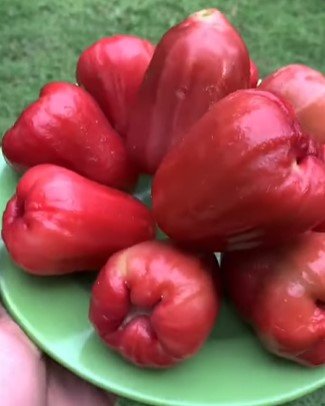
Red Wax apple Rare Fruit Garden Plant Home Live Plant Rare Garden #MPS
The Red Wax Apple, scientifically known as Syzygium samarangense, is a tropical fruit tree native to Southeast Asia. It is also referred to as Rose Apple, Java Apple, or Water Apple. Here's an overview of the Red Wax Apple:
1. **Appearance**: The Red Wax Apple tree typically grows to a height of 10-20 feet (3-6 meters) and has a dense, bushy canopy. The leaves are glossy green and oval-shaped. The fruit is bell-shaped with a waxy, smooth skin that can range in color from red to pink or even white, depending on the variety.
2. **Fruit**: The Red Wax Apple fruit is crisp and watery, similar to a pear in texture. It has a mild, slightly sweet flavor with a hint of floral notes. The fruit encloses a central core with small seeds, which are usually discarded when eating.
3. **Climate**: Red Wax Apples thrive in tropical and subtropical climates. They prefer warm temperatures and are sensitive to frost. They grow best in USDA hardiness zones 10-11, where temperatures do not drop below 30°F (-1°C).
4. **Light**: They prefer full sun for optimal fruit production but can tolerate partial shade. Adequate sunlight helps to promote flowering and fruiting.
5. **Soil**: Red Wax Apples prefer well-draining, fertile soil. They can tolerate a variety of soil types but perform best in loamy soils with good drainage. A slightly acidic to neutral pH (6.0-7.0) is ideal.
6. **Watering**: Keep the soil evenly moist but not waterlogged. Water regularly during dry periods, especially when the tree is flowering and fruiting. Reduce watering in winter or during cooler months.
7. **Fertilizing**: Feed Red Wax Apple trees with a balanced fertilizer formulated for fruit trees. Apply fertilizer in spring and summer to support healthy growth and fruit production.
8. **Pruning**: Prune the tree to maintain its shape and remove any dead or diseased branches. Pruning can also improve air circulation and sunlight penetration into the canopy.
9. **Propagation**: Red Wax Apples are commonly propagated from seeds or by air layering. Seeds should be planted fresh and kept moist until they germinate. Air layering involves creating a wound on a branch, wrapping it with moist soil or sphagnum moss, and allowing roots to form before separating and planting.
10. **Pests and Diseases**: Monitor for common pests such as aphids, scale insects, and fruit flies. Proper sanitation and pest control measures can help prevent infestations. Diseases like fungal leaf spots and fruit rot can occur in humid conditions or if the tree is overwatered.
Red Wax Apples are prized for their refreshing taste and attractive appearance, making them a popular fruit tree in tropical gardens and orchards. With proper care in terms of watering, fertilizing, and pest management, you can enjoy the delicious fruits of your Red Wax Apple tree.
In the photo is not factual item...
The size live plant item depends on stock...
Thank you
The Red Wax Apple, scientifically known as Syzygium samarangense, is a tropical fruit tree native to Southeast Asia. It is also referred to as Rose Apple, Java Apple, or Water Apple. Here's an overview of the Red Wax Apple:
1. **Appearance**: The Red Wax Apple tree typically grows to a height of 10-20 feet (3-6 meters) and has a dense, bushy canopy. The leaves are glossy green and oval-shaped. The fruit is bell-shaped with a waxy, smooth skin that can range in color from red to pink or even white, depending on the variety.
2. **Fruit**: The Red Wax Apple fruit is crisp and watery, similar to a pear in texture. It has a mild, slightly sweet flavor with a hint of floral notes. The fruit encloses a central core with small seeds, which are usually discarded when eating.
3. **Climate**: Red Wax Apples thrive in tropical and subtropical climates. They prefer warm temperatures and are sensitive to frost. They grow best in USDA hardiness zones 10-11, where temperatures do not drop below 30°F (-1°C).
4. **Light**: They prefer full sun for optimal fruit production but can tolerate partial shade. Adequate sunlight helps to promote flowering and fruiting.
5. **Soil**: Red Wax Apples prefer well-draining, fertile soil. They can tolerate a variety of soil types but perform best in loamy soils with good drainage. A slightly acidic to neutral pH (6.0-7.0) is ideal.
6. **Watering**: Keep the soil evenly moist but not waterlogged. Water regularly during dry periods, especially when the tree is flowering and fruiting. Reduce watering in winter or during cooler months.
7. **Fertilizing**: Feed Red Wax Apple trees with a balanced fertilizer formulated for fruit trees. Apply fertilizer in spring and summer to support healthy growth and fruit production.
8. **Pruning**: Prune the tree to maintain its shape and remove any dead or diseased branches. Pruning can also improve air circulation and sunlight penetration into the canopy.
9. **Propagation**: Red Wax Apples are commonly propagated from seeds or by air layering. Seeds should be planted fresh and kept moist until they germinate. Air layering involves creating a wound on a branch, wrapping it with moist soil or sphagnum moss, and allowing roots to form before separating and planting.
10. **Pests and Diseases**: Monitor for common pests such as aphids, scale insects, and fruit flies. Proper sanitation and pest control measures can help prevent infestations. Diseases like fungal leaf spots and fruit rot can occur in humid conditions or if the tree is overwatered.
Red Wax Apples are prized for their refreshing taste and attractive appearance, making them a popular fruit tree in tropical gardens and orchards. With proper care in terms of watering, fertilizing, and pest management, you can enjoy the delicious fruits of your Red Wax Apple tree.
In the photo is not factual item...
The size live plant item depends on stock...
Thank you
You may also be interested in:
-
£1,155.92

-
£248.37

-
£981.09

-
£460.26
-
£12.75

-
£317.50

-
£378.30

-
£2,733.75

-
£908.98

-
£135.11



 ID, Jawa Timur
