
£9.75
Add to Cart
The Art of Compounding by Wilbur Lincoln Scoville ➤ P. Blakiston's Son & co 1914 Fourth Edition
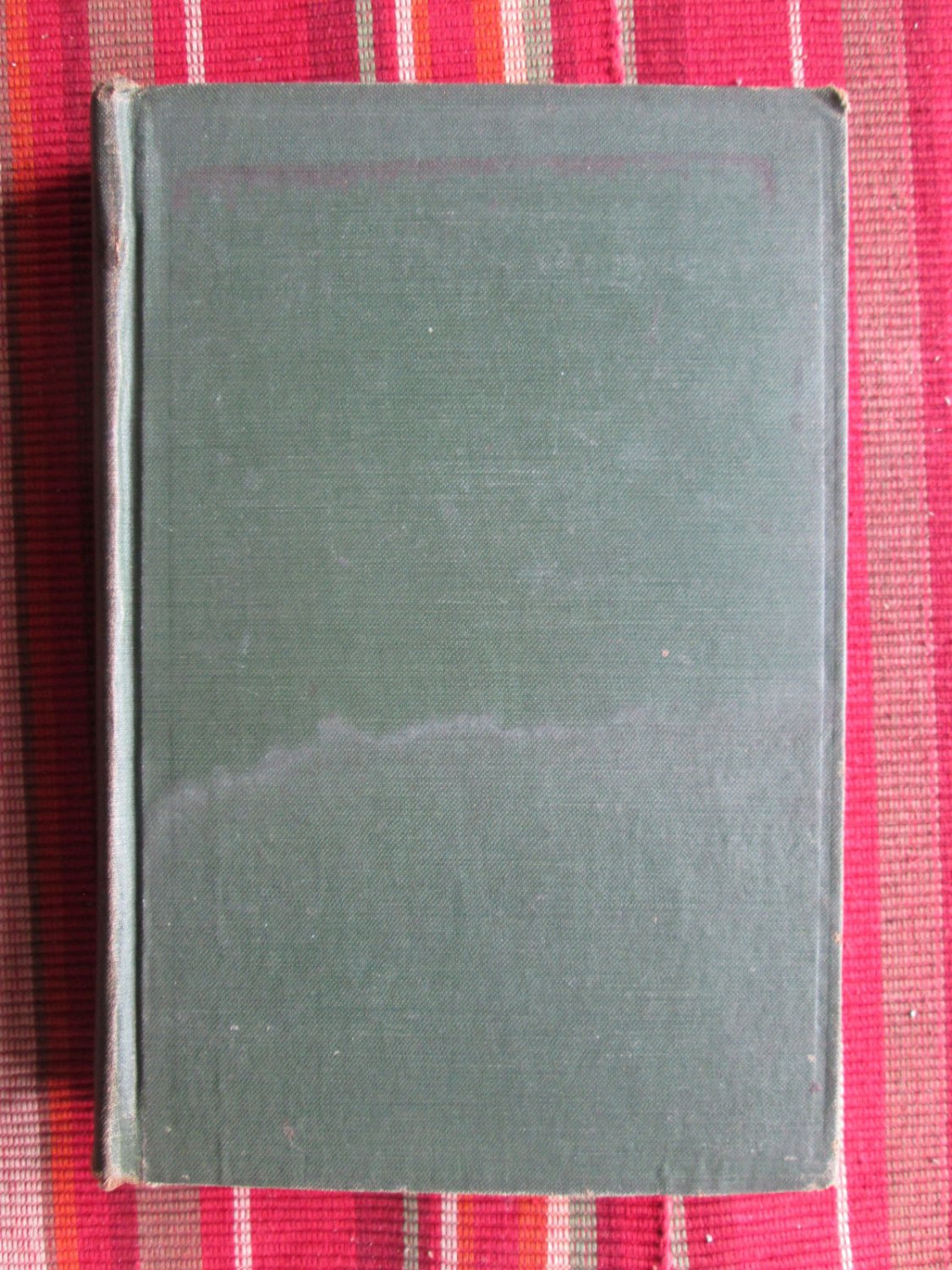


The Art of Compounding by Wilbur Lincoln Scoville P. Blakiston's Son & co 1914 Fourth Edition
Title: The Art of Compounding: A text book for students and a reference book for pharmacists at the prescription counter
Author: Wilbur Lincoln Scoville
Format: Hardcover
Publisher: P. Blakiston's Son & co 1914
Edition: Fourth Edition
Size: 6.25 X 9.25 X 1 * 390 pages
Synopsis: Preface to the Fourth Edition: The last decade has witnessed a marked increase of scientific interest in the prescription and its compounding in the United States. A number of factors have contributed to this, notably the stimulus of the Section on Pharmacy and Dispensing of the American Pharmaceutical Association and the growth of Local Branches of this Association. These have brought out numerous and excellent papers on the subject by well-qualified men, some of whom are also connected with Boards of Pharmacy as well as with pharmacy colleges. The Association of the Boards of Pharmacy and the Conference of Pharmaceutical Faculties by mutual annual conferences have markedly raised the The two status of the prescription in examinations and standards. The two editions of the Pharmaceutical Syllabus also illustrate the change from the empirical to the scientific standard of examinations and have contributed to the elevation of the prescription.
Then the normal developments of chemistry have also played an important part in pharmacy. The development of Colloidal Chemistry and its seemingly close relationship to enzyme action and medicinal operation has opened up a new field in dispensing. Preparations of a colloidal or semicolloidal character have been in use for some time, but the increase of late has been rapid, and there is a prospect of this line of dispensing becoming of considerable importance.
The development of antisepsis and the parenteral administration of remedies has lead to the use of the ampoule, a form of dispensing which was practically unknown ten years ago, but is now common.
New studies of emulsions from a physico-chemical point of view have cleared up some fundamental principles, and have thrown a new light on the properties of these preparations.
The "phase rule" has explained the liquefaction which occurs when certain ketones and phenolic bodies are mixed and has developed many instances of eutectic mixtures in pharmaceutical combinations.
The British Medical Association has, through a special committee, made a thorough study of ointment bases from both the therapeutic and pharmaceutic standpoint, and while no striking discoveries have been made, yet the subject is clearer and the choice of ointment bases can be made more intelligently because of this study. The development of hydrogenated oils bids fair to offer some improvements in ointment bases in the near future, but this has not yet been investigated.
New developments in the pharmaceutical applications of sterilization have been numerous and these are noted partly under ampoules, partly in the chapter on Incompatibilities, and partly in the chapter on Sterilization, the former edition of which was edited by Prof. A. B. Perry of Boston.
Biological Products are a special branch of recent medical development, and the use of these remedies promises to advance rapidly. In preparing the chapter on this subject the author deems himself fortunate in securing the help of Mr. L. T. Clark, B. S., who has had a large experience in the manufacture of these products, and with the problems connected with their use. Mr. Clark has devoted considerable time to this chapter, and while the information contained therein is brief yet in so far as it goes the statements are reliable and up to date. This chapter should prove of real use to pharmacists, and may warrant considerable expansion in the future.
The friendly criticism of Prof. Edward Kremers on the Third Edition has led to the inclusion of illustrations in this edition. If it strikes the reader that these lean decidedly to the manufacturing scale, it may be considered that the intent of the book is educational, and that while the familiar mortar-and-pestle, pill-tile and graduate will continue to hold their place as the implements for preparing small quantities of remedies, as in general prescription work, yet in the preparation of these or similar articles in quantity better implements are available. The illustrations are thus intended to acquaint the student with some of the forms of apparatus in use by manufacturers, and to call attention to the economic need of modern machinery for products which are in frequent or large demand.
For the purpose of adding interest to the study of individual prescriptions some 225 prescriptions from State Board Examinations have been added in their classified places. These prescriptions are taken from published examinations, and since but few of the Boards of Pharmacy will permit of the publication of their examinations, and no attempt has been made to secure any surreptitiously, these are given as published. In many instances the credit for the prescriptions was doubtful, and the prescriptions have been accredited to the most probable board under the circumstances given in the publication.
A more condensed method of printing has allowed of a considerable increase in the illustrative prescriptions without a corresponding increase in the number of pages.
Overall Condition: Acceptable: The book has obvious wear. It has some wear to the cover, but its integrity is intact. The binding has a cracked spine at the title page but its integrity is still intact. A couple of leaves have slight damage to the edge. There is no writing in the margins or underlining and highlighting of text, and there are no missing pages or anything that would compromise the legibility or understanding of the text.
Secure shipping bubble-wrapped in a new box.
2026--U.S. shipping for this (Three Pounds Media Mail) is $5.97 with tracking.
Multiple items will be combined for the lowest shipping price.
International Shipping cost is based on the destination so inquire before buying. Mobile users must scroll to the bottom and click on 'use desktop site' to bring up the Ask a Question link which sends me an email.
(PLEASE CONTACT ME BEFORE MAKING ANY PAYMENT FROM OUTSIDE THE U.S.)
==========================================================================================================================
Just about all the books are USED books. Some have been used more gently than others. Some have been in libraries and have typical library extras. Some are so old and/or interesting that they are being offered for the sake of preservation regardless of the condition they are in. If the condition of the book is very important to you, please feel free to click the 'Ask seller a question' link and I will tell you more.
=========================================================================================
Title: The Art of Compounding: A text book for students and a reference book for pharmacists at the prescription counter
Author: Wilbur Lincoln Scoville
Format: Hardcover
Publisher: P. Blakiston's Son & co 1914
Edition: Fourth Edition
Size: 6.25 X 9.25 X 1 * 390 pages
Synopsis: Preface to the Fourth Edition: The last decade has witnessed a marked increase of scientific interest in the prescription and its compounding in the United States. A number of factors have contributed to this, notably the stimulus of the Section on Pharmacy and Dispensing of the American Pharmaceutical Association and the growth of Local Branches of this Association. These have brought out numerous and excellent papers on the subject by well-qualified men, some of whom are also connected with Boards of Pharmacy as well as with pharmacy colleges. The Association of the Boards of Pharmacy and the Conference of Pharmaceutical Faculties by mutual annual conferences have markedly raised the The two status of the prescription in examinations and standards. The two editions of the Pharmaceutical Syllabus also illustrate the change from the empirical to the scientific standard of examinations and have contributed to the elevation of the prescription.
Then the normal developments of chemistry have also played an important part in pharmacy. The development of Colloidal Chemistry and its seemingly close relationship to enzyme action and medicinal operation has opened up a new field in dispensing. Preparations of a colloidal or semicolloidal character have been in use for some time, but the increase of late has been rapid, and there is a prospect of this line of dispensing becoming of considerable importance.
The development of antisepsis and the parenteral administration of remedies has lead to the use of the ampoule, a form of dispensing which was practically unknown ten years ago, but is now common.
New studies of emulsions from a physico-chemical point of view have cleared up some fundamental principles, and have thrown a new light on the properties of these preparations.
The "phase rule" has explained the liquefaction which occurs when certain ketones and phenolic bodies are mixed and has developed many instances of eutectic mixtures in pharmaceutical combinations.
The British Medical Association has, through a special committee, made a thorough study of ointment bases from both the therapeutic and pharmaceutic standpoint, and while no striking discoveries have been made, yet the subject is clearer and the choice of ointment bases can be made more intelligently because of this study. The development of hydrogenated oils bids fair to offer some improvements in ointment bases in the near future, but this has not yet been investigated.
New developments in the pharmaceutical applications of sterilization have been numerous and these are noted partly under ampoules, partly in the chapter on Incompatibilities, and partly in the chapter on Sterilization, the former edition of which was edited by Prof. A. B. Perry of Boston.
Biological Products are a special branch of recent medical development, and the use of these remedies promises to advance rapidly. In preparing the chapter on this subject the author deems himself fortunate in securing the help of Mr. L. T. Clark, B. S., who has had a large experience in the manufacture of these products, and with the problems connected with their use. Mr. Clark has devoted considerable time to this chapter, and while the information contained therein is brief yet in so far as it goes the statements are reliable and up to date. This chapter should prove of real use to pharmacists, and may warrant considerable expansion in the future.
The friendly criticism of Prof. Edward Kremers on the Third Edition has led to the inclusion of illustrations in this edition. If it strikes the reader that these lean decidedly to the manufacturing scale, it may be considered that the intent of the book is educational, and that while the familiar mortar-and-pestle, pill-tile and graduate will continue to hold their place as the implements for preparing small quantities of remedies, as in general prescription work, yet in the preparation of these or similar articles in quantity better implements are available. The illustrations are thus intended to acquaint the student with some of the forms of apparatus in use by manufacturers, and to call attention to the economic need of modern machinery for products which are in frequent or large demand.
For the purpose of adding interest to the study of individual prescriptions some 225 prescriptions from State Board Examinations have been added in their classified places. These prescriptions are taken from published examinations, and since but few of the Boards of Pharmacy will permit of the publication of their examinations, and no attempt has been made to secure any surreptitiously, these are given as published. In many instances the credit for the prescriptions was doubtful, and the prescriptions have been accredited to the most probable board under the circumstances given in the publication.
A more condensed method of printing has allowed of a considerable increase in the illustrative prescriptions without a corresponding increase in the number of pages.
Overall Condition: Acceptable: The book has obvious wear. It has some wear to the cover, but its integrity is intact. The binding has a cracked spine at the title page but its integrity is still intact. A couple of leaves have slight damage to the edge. There is no writing in the margins or underlining and highlighting of text, and there are no missing pages or anything that would compromise the legibility or understanding of the text.
Secure shipping bubble-wrapped in a new box.
2026--U.S. shipping for this (Three Pounds Media Mail) is $5.97 with tracking.
Multiple items will be combined for the lowest shipping price.
International Shipping cost is based on the destination so inquire before buying. Mobile users must scroll to the bottom and click on 'use desktop site' to bring up the Ask a Question link which sends me an email.
(PLEASE CONTACT ME BEFORE MAKING ANY PAYMENT FROM OUTSIDE THE U.S.)
==========================================================================================================================
Just about all the books are USED books. Some have been used more gently than others. Some have been in libraries and have typical library extras. Some are so old and/or interesting that they are being offered for the sake of preservation regardless of the condition they are in. If the condition of the book is very important to you, please feel free to click the 'Ask seller a question' link and I will tell you more.
=========================================================================================


