
£6.87
Add to Cart
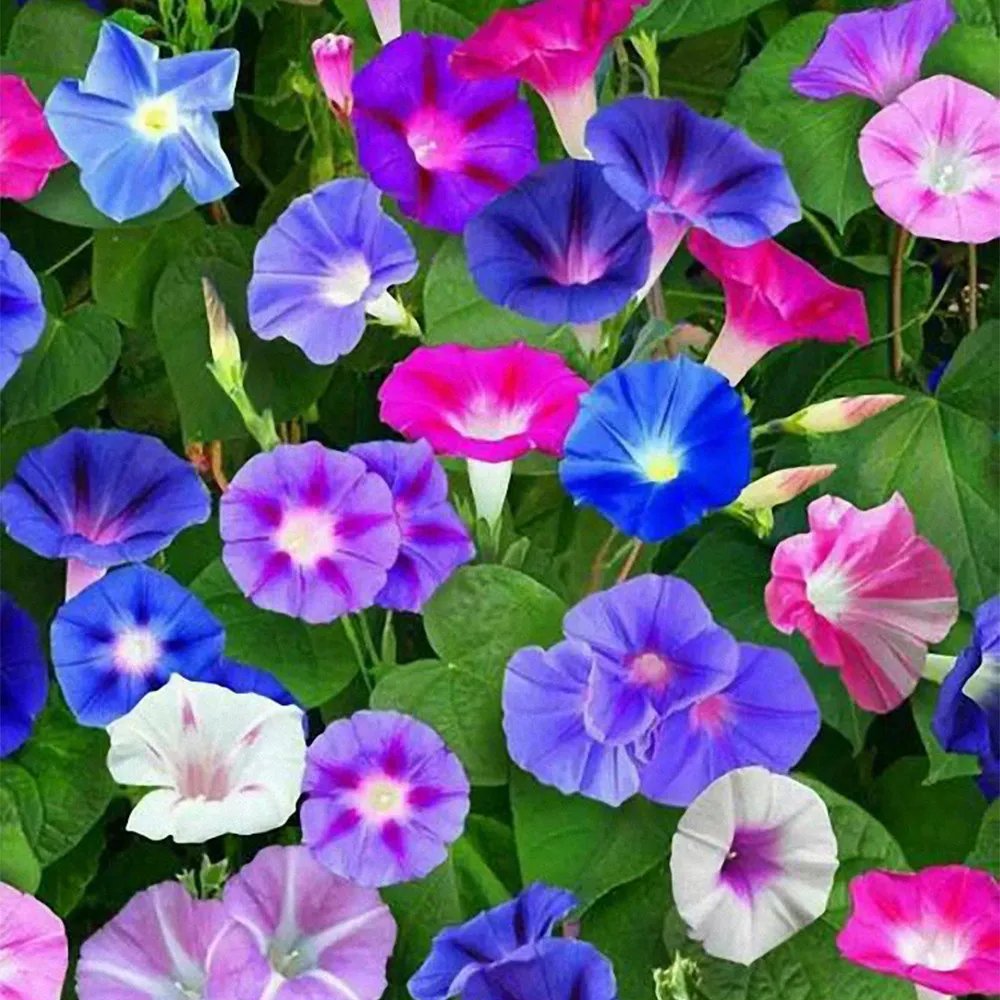
100 seeds Mixed Color Morning Glory Seeds
More than 10 available
Details
Shipping: United Kingdom: £5.00 (more destinations)
Condition: Brand new
Main Traits:
- Ipomoea nil (syn. Pharbitis nil) of the family Convolvulaceae, commonly called morning glory, is an annual twining herb, The stems are sinistrorsely twining, reaching over 3 meters long, and the whole plant is densely hispid. Leaves are orbicular-cordate to broadly ovate with irregularly lobed margins. The funnel-shaped corolla measures up to 10 cm in diameter, displaying diverse colors (e.g., blue, purple, pink, white), flowering from June to October.
- Native to tropical and subtropical Asia, it is widely cultivated for ornamental and medicinal purposes (its seeds, known as "Pharbitis Semen" in traditional medicine, hold high pharmacological value). This species prefers warm, sunny conditions, being intolerant of cold but highly drought- and barren-tolerant. It adapts to most soils but thrives in loose, fertile, well-drained sandy loam.
- Ipomoea nil (syn. Pharbitis nil) of the family Convolvulaceae, commonly called morning glory, is an annual twining herb, The stems are sinistrorsely twining, reaching over 3 meters long, and the whole plant is densely hispid. Leaves are orbicular-cordate to broadly ovate with irregularly lobed margins. The funnel-shaped corolla measures up to 10 cm in diameter, displaying diverse colors (e.g., blue, purple, pink, white), flowering from June to October.
- Native to tropical and subtropical Asia, it is widely cultivated for ornamental and medicinal purposes (its seeds, known as "Pharbitis Semen" in traditional medicine, hold high pharmacological value). This species prefers warm, sunny conditions, being intolerant of cold but highly drought- and barren-tolerant. It adapts to most soils but thrives in loose, fertile, well-drained sandy loam.


 ID, Jawa Tengah
