
£3.30
Add to Cart
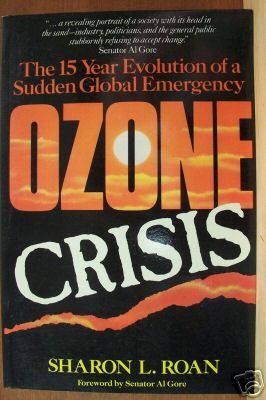
OZONE CRISIS by Sharon Roan, The 15 Year Evolution of a Sudden Global Emergency
Only 1 available
Details
Shipping: United Kingdom: free (more destinations)
Condition: Used
*The store has not been updated recently. You may want to contact the merchant to confirm the availability of the product.
Publisher: John Wiley 1990. ISBN: 0471528234. Trade softcover 8vo (9.5" tall), very good condition - only light wear overall. light scuffing of cover, light soiling outer edge of pages. Internal pages clean & unmarked. b/w illus.
From Publishers Weekly
Damage to the Earth's fragile ozone layer by airborne chlorofluorocarbons (CFCs) , used in aerosols and refrigerants, was strongly suspected by scientists as early as 1973. But it was not until 15 years later that the U. S. Ratified an international agreement restricting CFC use--and that pact only limits CFC emissions by about one-third. Science writer Roan looks at this many-sided controversy in her balanced, disturbing report, a remarkable tale of government and corporate foot-dragging, public indifference, environmentalists' furor and scientific experiment. The discovery that CFC-related ozone depletion, besides letting in dangerous ultraviolet radiation, can fuel the greenhouse effect and thus overheat the planet did not prompt decisive action. A turning point came only in 1984 with the shocking detection of a seasonal hole in the ozone layer over Antarctica. Those who favor a complete phase-out of "ozone-eating" chemicals will find plenty of ammunition in this dossier. Photos.
*Ships from Canada (insurance included) - see FAQ above for details.
From Publishers Weekly
Damage to the Earth's fragile ozone layer by airborne chlorofluorocarbons (CFCs) , used in aerosols and refrigerants, was strongly suspected by scientists as early as 1973. But it was not until 15 years later that the U. S. Ratified an international agreement restricting CFC use--and that pact only limits CFC emissions by about one-third. Science writer Roan looks at this many-sided controversy in her balanced, disturbing report, a remarkable tale of government and corporate foot-dragging, public indifference, environmentalists' furor and scientific experiment. The discovery that CFC-related ozone depletion, besides letting in dangerous ultraviolet radiation, can fuel the greenhouse effect and thus overheat the planet did not prompt decisive action. A turning point came only in 1984 with the shocking detection of a seasonal hole in the ozone layer over Antarctica. Those who favor a complete phase-out of "ozone-eating" chemicals will find plenty of ammunition in this dossier. Photos.
*Ships from Canada (insurance included) - see FAQ above for details.


 CA, Alberta
